History is a great area of interest for me, and over the years I have accumulated quite a bit of information on specific Periods. One is the Victorian Era, and this is why for my Final Major Project I have decided to combine my interests of illustration and history, exploring aspects of Victorian Culture to develop this work into a series of short narratives. My objective is to communicate my passion for knowledge on this period and provide a gentle engagement to my audience and make the information more accessible for people.
I want to create my own narrative and characters for the project, placing the characters into this world, taking facts about the period and weaving it all into the narrative, this will spark the audiences interest to look into the subject more and drawing their own conclusions and opinions about the period.
The Victorian period is known for its innovation and development, but there was a different side to Victorian Culture with its myths, legends and speculative fiction as well an unhealthy obsession with the occult .
This was a time of ghosts, ghouls and monsters, mostly fiction, but I began to think of how different this period would have been if they were real or a grain of truth was present.
For my project I will be setting the narrative in a kind of altered version of the Victorian Empire where the entities within the fiction are real and the characters I introduce into the narrative will have to interact with them.
I will be providing facts and then will tweak them slightly to engage the audience to look into the real information more with it being so easy to access via the internet and books, . Im hoping that my work will be the starting point for my target audience that projects them to their own research.
I began to look at examples of others work with similar objectives to myself or a visual language that is interesting to explore in order to develop my visual style and aspects of production for this project , I have given credit to images, videos and quotes via a link to my bibliography.
Sydney Padua
Sydney Padua is an English Animator, Storyboard Artist and Illustrator who is currently working on a webcomic called “2D Goggles or The Thrilling Adventures of Lovelace and Babbage” [1]
Padua has created her own pocket universe that resembles 19th Century England and included extensive amounts of footnotes based on information covered in the narrative of the comic , giving it the summery of “ A highly irregular Webcomic, With Footnotes*” [2] .
She provides us with in depth information on Figures , Theories and information about the period via links to Ebooks, articles and videos . Her characters are based on real people from the period but with her own quirky and eccentric flare. Her main characters are Ada Lovelace and Charles Babbage , the developers of the Analytical Engine, , they only succeeded in developing this machine but in Padua’s narrative it has been fully built and in working order.


Padua’s drawing style seems to hark back to victorian etchings and early comics, creating a kind of period feel to the look of the series . She uses mixed media , often collage and photoshop to combine her images with Etchings from the period.

Nico Marlet
Nico Martlet is a French- American Animator and character designer, His best known work is from Dreamworks animations such as ‘How to Tame Your Dragon’ .

His character designs with their rough sketchy quality fills the character with movement and charm , his textures and line work work well with his drawing technique and he has a knack for diverse character designs, His character sheets are filled with character design development and a host of diverse characters , each with their own specific characteristic which makes him a great artist to look at for when it comes to me researching things like character design and begin developing characters as it will be important to accent their individuality .


Mike Mignola
Mike Mignola Is an American Comic Book Artist whose unique style lends itself to various media.
He is Known for his comic book series such as “Hellboy” and “B. P. R.D” , and for working on many projects and films for example and bringing his Hellboy series to life via Live Action films.

Hellboy characters are brought to life by Mignola and Director Guillermo Del Toro , both work together to create a fantastical landscape and an array of strange creatures that live side by side with the modern World. The lighting and mis en scene of the films match Mignolas artwork to bring the world that we see on the page to life onscreen.

His work has an expressive look which generates mood into his images through bold shadows which seems to pay homage to the German Expressionist movement . His imagery is dark but this is the perfect setting for a lot of his narratives .
His use of atmospheric shadow, tone , his peculiar colouring and drawing style set the mood of the narrative very well.

Films and Television
Film is a form of escapism for people, we suspend disbelief and by doing so we can be transported anywhere, giving us personal views of events unfolding and a particular view to characters and narrative. I explored some to get a sense of period and ambiance. I find it interesting to see how different periods depict an Era, Films from the 1920’s will give a different impression of Victorian Britain than say a modern television series.
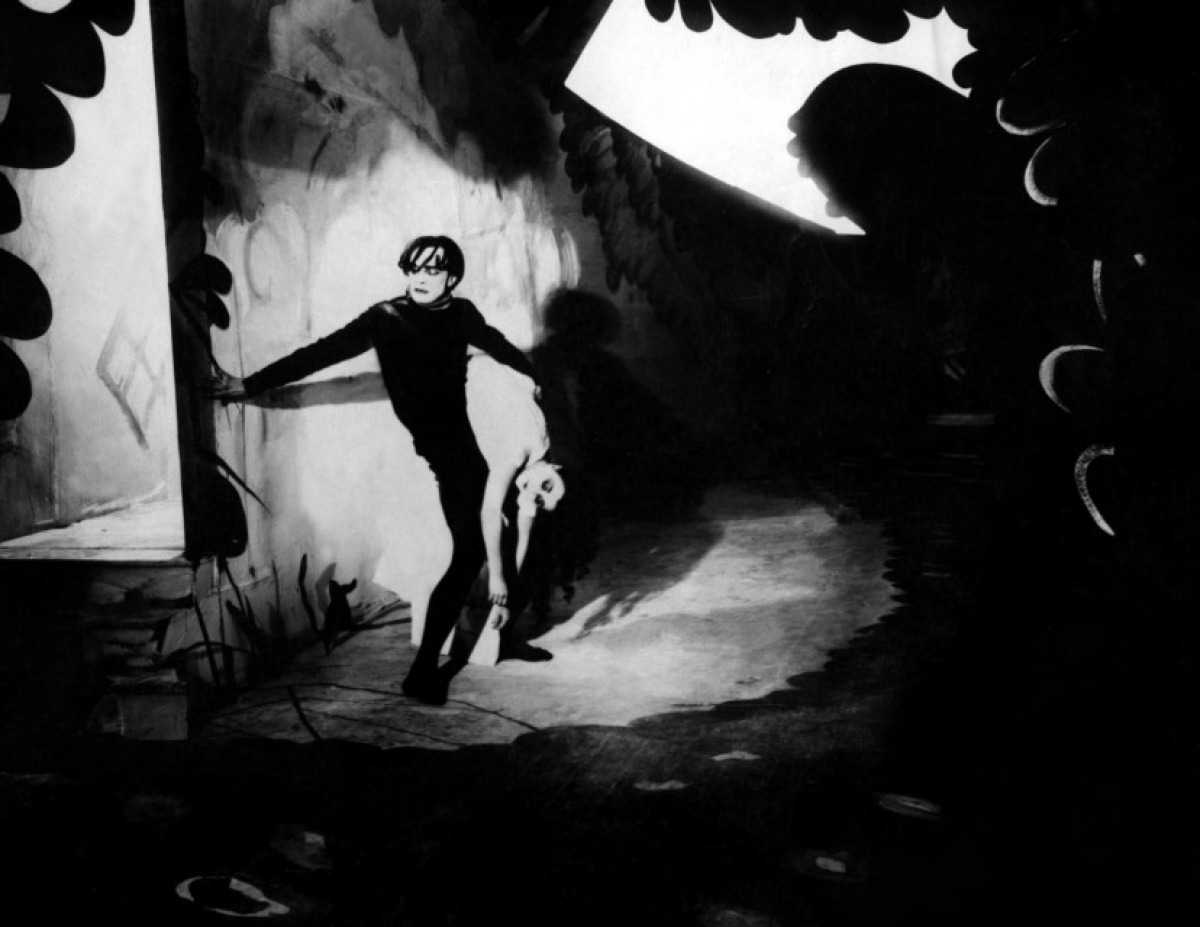
Early films are quite interesting to look at and one period that I found really visual and interesting was the “Expressionist Cinema” Era in Germany from around 1918- 33.
Films like “The Cabinet of Dr. Caligari” and “Nosferatu” are great examples from this period, the sets for these films were artistic and planned , even going as far to paint strips of light onto walls to give the effect of dramatic lighting and often giving the films an unique atmosphere but also generating a specific ambiance. Over stylised sets with abstract shapes and shadows along with distorted buildings and beams of light help project the audience into a surreal landscape.
Films like “The Cabinet of Dr. Caligari” and “Nosferatu” are great examples from this period, the sets for these films were artistic and planned , even going as far to paint strips of light onto walls to give the effect of dramatic lighting and often giving the films an unique atmosphere but also generating a specific ambiance. Over stylised sets with abstract shapes and shadows along with distorted buildings and beams of light help project the audience into a surreal landscape.

German Expressionist has influenced many areas of film and art and some modern Film directors choose to pay homage to it in their films, for example Tim Burton’s Edward Scissorhands shows scenes that have been influenced by the style of Caligari through lighting, set and character design, generating a similar surreal mood to the film through distorted light and buildings as well as over stylised costume and makeup.
When you compare two stills from both films you see a similarity to the lighting and the main figure as seen here in a garden scene from both films.
Burton seems to have based the character of Edward on Ceasar from Caligari, as both sport black tight fitting clothing, a slender body shape and similar make up.

Television Programs such as ‘Ripper Street’ and ‘Whitechapel’ are also useful to look at in terms of Mis en Scene and character development. Both base their plots on similar locations and context such as Crimes in the Whitechapel District of London but they differ greatly because of the time period in which they are set, Ripper street is set in Victorian london whereas Whitechapel takes place in modern London. Its interesting to see how they differ in terms of policing and character. I analysed these two series in more detail here
Literature
I looked at literature from the period I have chosen to see what impact they have on modern audiences, if any.
Authors such as Poe, Dickens, Conan Doyle, Wilde, Wells and Verne are associated with this period but another form of popular serial fiction was introduced to the lower class, this was fiction publications and story papers such as “Penny Dreadfuls”.
Not many of these have survived and due to their cheap nature as they were made to be an accessible way for the lower class to read speculative fiction and surreal narratives.It’s interesting that some of these characters from these publications like Sweeney Todd have stood the test of time and carried on being recognised in popular culture due to their memorable persona.

Not only is the illustrations and layout memorable, but the content itself, some of the stories were based off well known legends of the time or iconic figures from legend such as Dick Turpin, others more peculiar, such as "Spring Heeled Jack" , a entity of English Folklore and an unexplained phenomena.

Looking at the compositions of some of the images within the publications such as the image shown above, you get a sense of what the illustrator wanted to audience to see, the way the image is framed with the bottom figures placed at the bottom section being towered over by the main figure of Spring Heeled Jack who seems to be swooping in to attack. The artist wants the reader to focus on Jack and so has placed him near the titles to show he is the central figure of the narrative and also to create shock for the reader as the other figures are clearly frightened by his presence and by giving Jack quite a fearsome appearance.
By looking at the fiction from the period , I found a fantastic platform to research into the myths, legends and figures from the period to explore in my own narrative , looking into these will provide me with context and ideas to place into my own narrative and allow me to experiment with getting a similar ambiance and charm of the period which these publications clearly have lots of .
Going back to popular fiction from the period , I looked at how some authors and narratives have had a cultural impact on our society.
Science Fiction was not recognised in this period, but its fascinating to see how Victorian writers such as H.G Wells and Jules Verne are considered founders of early Science Fiction which in turn has developed into many different Sub genres, one genre in particular has gone full circle and merged modern and futuristic technology into a period setting . ‘Steampunk’ has been desribed as being “ Inspired by nineteenth- century science fiction and fantasy, it explores the speculative possibilities of technology in an imagined past” [21] , it’s a diverse and creative form of science fiction that entertains the possibility that Victorians could have harnessed some of the technology from Wells and Vernes novels as well as variations of modern inventions so that the Victorian society could have been a very different place . The steampunk movement has made its way into popular culture with music, film and art all taking influence from it and creating a form of alternate history for us to explore thanks to early Science fiction novellas .


In terms of design, this movement could provide another way of looking at the project in terms of creativity and style , by taking a period of history that seems familiar to us and changing something within alters it and transports us to an alternate echo of the past.
For my research project, I would like to explore a few elements such as looking into archetypes and character , how to weave information into narrative or the various ways I can play around with the narrative and how to generate the right atmosphere though my visual style. I also like the idea of looking into the steampunk visual language more also so this is another possibility. I am not too sure as the the true outcome of this research project but I want to explore different outcomes, for example a short animation, a children's book or a short comic and from there start to develop and prepare for my Final Major Project.
